




Last Updated: November 20, 2026
Quick Summary
Natural dyes are a real but partial alternative to synthetic dyes: plant-based, microbial, and waste-derived colorants exist and are generally biodegradable and non-toxic, yet they vary batch to batch, need mordants to hold, and cost more than petroleum-derived colorants. Scalability is named as the main obstacle, so natural dyes work best on cotton, wool, and blends where the full mordant and fixation process is controlled.
- Roughly 800,000 tonnes of synthetic dyes are produced globally each year, with textiles consuming about 75%.
- Protein fibers like wool and silk take natural dyes readily, while cotton usually needs a tannin pre-treatment.
- Fermentation-derived microbial pigments run in controlled tanks and are more predictable than a plant harvest.
- Alum is the workhorse mordant for many plant dyes, building wash fastness with relatively low toxicity.
- Natural is not a regulated clothing label term, so ask brands for the dye source and mordant process.
Table of Contents
- What Sustainable Alternatives to Synthetic Dyes Actually Exist
- Natural vs. Synthetic Dyes: How the Two Compare
- Plant-Based Textile Dyes: Indigo, Madder, Turmeric, and More
- Microbial Dyes for Textiles: Fermentation and Biogenic Colourants
- Colorfast Natural Dyes: What It Takes to Make Them Last
- Cost, Supply, and Scale: Why Natural Dyes Cost More
- How to Tell Whether a Garment Uses Lower-Impact Dyes
- Choosing Handprinted Pieces Made With Lower-Impact Dyes
- Frequently Asked Questions
What Sustainable Alternatives to Synthetic Dyes Actually Exist
Sustainable alternatives to synthetic dyes are colorants derived from plants, minerals, and microbes rather than petroleum, and they now cover a real range: plant-based dyes, microbial pigments grown in fermentation tanks, and biogenic colourants produced from agricultural and food waste. The question is no longer whether they exist. It is whether they perform well enough to matter.
The scale of the problem explains the interest. According to Pizzicato et al., "Advancements in Sustainable Natural Dyes for Textile Applications", roughly 800,000 tonnes of synthetic dyes are produced globally each year, and the textile industry consumes about 75% of that total.
Below, we compare each alternative on source, application method, performance, and cost, with the trade-offs stated plainly.
Natural vs. Synthetic Dyes: How the Two Compare
Natural dyes come from renewable feedstocks and are generally biodegradable and non-toxic, while synthetic dyes are engineered for consistency, color strength, and low cost at industrial volume. That single trade-off, performance and price against environmental load, drives almost every decision in this category. But the comparison only becomes useful when you break it into the measures that actually differ: water, energy, emissions, land use, wastewater, and the full process chemistry that surrounds the dye itself.
A 2026 comparative analysis of natural and synthetic dyes describes natural colorants as biodegradable, non-toxic, and renewable, while flagging scalability as the main obstacle. That is a fair summary. What the summary leaves out is that a dye's source alone does not determine its impact.
Environmental Impact: Water, Chemicals, and Wastewater
The environmental case is real but narrower than marketing suggests. Synthetic dyeing generates wastewater pollution and heavy chemical inputs, and the textile industry's share of global synthetic dye consumption is the core of the problem. Natural dyes reduce toxicity and rely on renewable resources, but they are not water-free.
A side-by-side lifecycle view is more honest than a single score. On water, natural dyeing can go either way: plant dyes may need longer mordant baths and extra rinses, while synthetic dyeing concentrates water use in fewer, more chemically loaded baths. On energy, fermentation-derived colorants shift the load to tank heating, aeration, and sterilization rather than agricultural harvest.
Performance and Scalability Trade-Offs
Synthetic dyes win on color strength, shade consistency, and fixation. Natural dyes vary batch to batch, bond less predictably to fiber, and need mordants to hold.
The performance gap also depends on fiber.
Scalability has a second dimension beyond volume: batch consistency. A mill that specifies a synthetic dye code can repeat a shade across seasons; a natural dye program has to manage feedstock variation, extraction yield, and water chemistry to get close.
The two dye types differ on a handful of measures that matter most to buyers and mills.
| Measure | Natural dyes | Synthetic dyes |
|---|---|---|
| Source | Renewable feedstocks; generally biodegradable and non-toxic | Petroleum-derived, engineered for consistency |
| Color strength and shade consistency | Vary batch to batch; bond less predictably | Win on color strength, shade consistency, fixation |
| Water use | Mordant baths and extra rinses; can go either way | Concentrated in fewer, more chemically loaded baths |
| Energy | Fermentation shifts load to tank heating, aeration, sterilization | Not stated in article |
| Land use | Plant dyes compete with food and fiber crops | Not stated in article |
| Wastewater | Key variable is mordant metals, pH adjusters, unfixed dye | Same key variable: what else goes down the drain |
| Fiber compatibility | Wool and silk take readily; cotton needs tannin pre-treatment | Not stated in article |
| Scalability | Craft process; scalability named as limiting factor | Manufactured to specification at industrial volume |
Plant-Based Textile Dyes: Indigo, Madder, Turmeric, and More
Plant-based textile dyes are colorants extracted from roots, leaves, flowers, and bark, and the best-known are indigo for blue, madder root for red, turmeric for yellow, cochineal for crimson, plus eucalyptus and oak leaves for earthy tones.
Indigo is the outlier. If you want to see what a finished indigo piece looks like rather than a swatch, our ruffle tee in indigo shows the real-world result.
Microbial Dyes for Textiles: Fermentation and Biogenic Colourants
Microbial dyes for textiles are pigments produced by bacteria, fungi, and yeast grown in controlled fermentation, and they are the most interesting development in this field. A 2025 review in MDPI on natural dyes and pigments identifies microbial pigments as a promising alternative to both synthetic and plant-based colorants, though it offers no adoption figures, which tells you how early this still is.
The appeal is consistency. Fermentation runs in tanks under controlled conditions, so pigment output is far more predictable than a madder harvest. A 2022 Royal Society of Chemistry review of biogenic colourants presents fermentation-derived colorants as a possible route for textile dyeing, again without quantified commercial uptake. Promise, not yet volume.
Colorfast Natural Dyes: What It Takes to Make Them Last
Colorfast natural dyes are achievable, but they depend on three things working together: the right mordant, genuine fiber affinity, and controlled fixation. Skip any one and the color walks out in the first wash. The gap most sustainability coverage leaves open is that the dye's source is only one input; mordants, auxiliaries, pretreatment, and finishing do as much to determine durability and environmental load as the colorant itself.
Mordants, Fiber Affinity, and Fixation
Mordants are metal salts, commonly alum or iron, that create a bridge between dye molecule and fiber so the color binds instead of rinsing away.
Fiber affinity matters just as much. Protein fibers like wool and silk have amine and carboxyl groups that bind many natural dyes readily, so they often need only a simple alum mordant.
Fixation is the final variable, and it governs wash fastness, light fastness, and shade consistency.
Watch out: a dye labeled natural can still be applied with a harsh mordant or auxiliary that undercuts the sustainability claim, so ask what the full process was, not just what the colorant was.
Auxiliaries, Finishing, and the Full-Process View
Beyond mordants, the auxiliaries in a dye bath shape both performance and impact. Wetting agents help liquor penetrate dense weaves, pH adjusters keep indigo vats and madder baths in the range where the dye behaves predictably, and leveling agents reduce patchiness on large pieces. Each one adds to the chemical load of the wastewater, and some conventional auxiliaries are the very inputs that make synthetic dyeing problematic.
Finishing is the other half of durability. A natural-dyed garment that is washed gently and air-dried will hold shade far longer than one put through hot cycles and tumble drying, and a maker who explains care instructions is effectively extending the colorfastness of the piece.
Cost, Supply, and Scale: Why Natural Dyes Cost More
Natural dyes cost more because the inputs are seasonal, lower-yield, and labor-intensive, and none of that scales like a chemical supply chain. Madder root and indigo require land, harvest time, and extraction, and the resulting dye lot varies. Synthetic colorants are manufactured to a specification at a fraction of the unit cost.
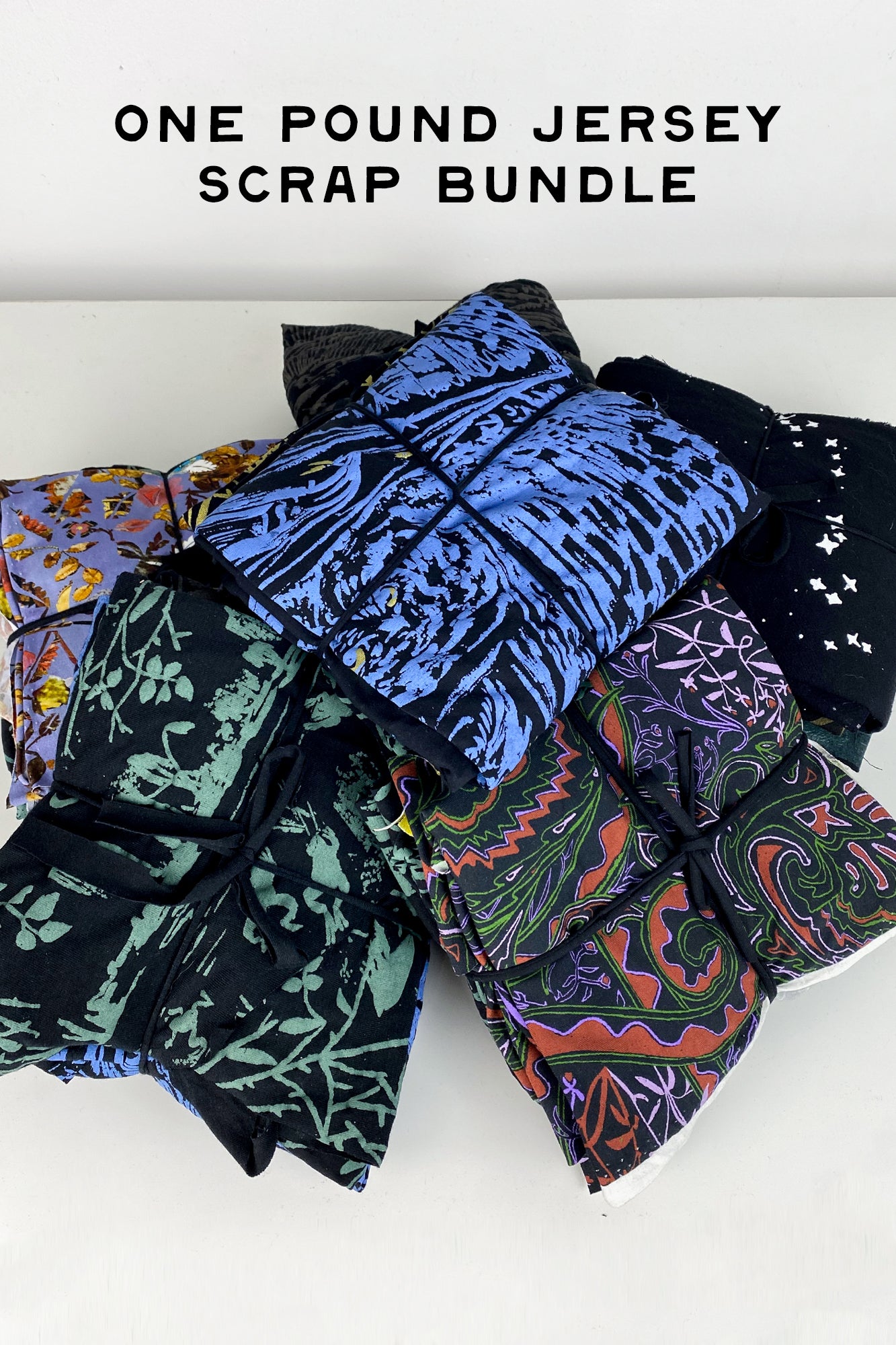
That gap shows up in garment pricing. Our scrap bundle is one way to buy into small-batch, lower-impact textiles without paying full piece pricing. Supply reliability is the harder problem: a mill cannot promise an exact shade across seasons the way it can with a synthetic dye code, and that unpredictability is precisely why commercial adoption has lagged.
How to Tell Whether a Garment Uses Lower-Impact Dyes
You can't confirm a dye process from a hangtag alone, so treat dye claims as you would any other sustainability claim: ask for specifics and see whether the brand can answer. A vague "eco-friendly dyes" line means little. A brand that names its dye source, its mordant process, and where the dyeing happens is telling you something checkable.
A practical checklist:
- Does the brand name the dye type, such as plant-based, microbial, or low-impact reactive?
- Does it say where dyeing happens and who does it?
- Can it explain its mordant or fixation process?
- Does it disclose fiber content, since natural dyes behave differently on cotton versus wool?
- Does it make a certification claim it can actually substantiate?
Watch out: "natural" is not a regulated term on a clothing label, so a natural dye claim can mean anything from genuine plant dye to a synthetic colorant with a plant extract added. Ask for the process, not the adjective.
Choosing Handprinted Pieces Made With Lower-Impact Dyes
The most reliable signal is production transparency: a maker who dyes and prints in-house can tell you exactly what went into the color.
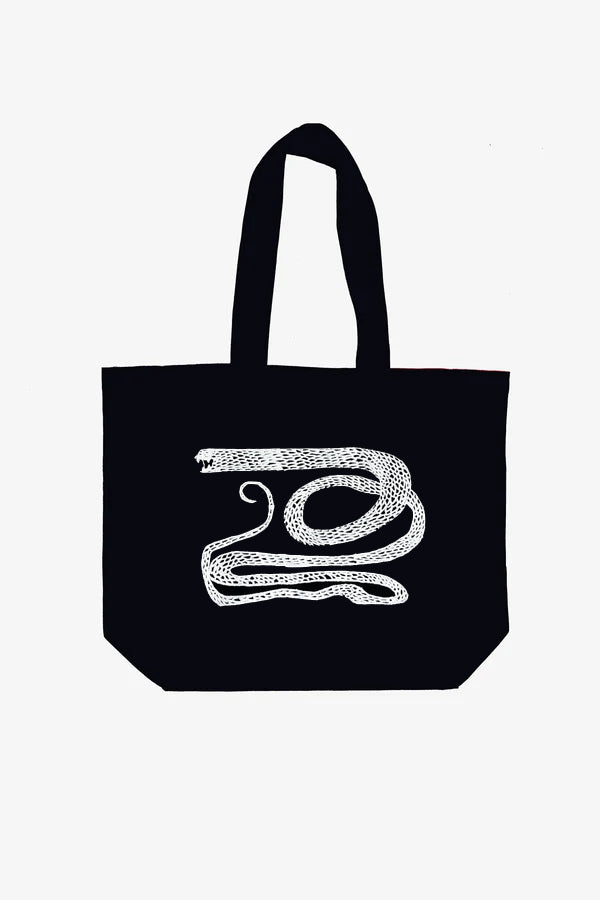
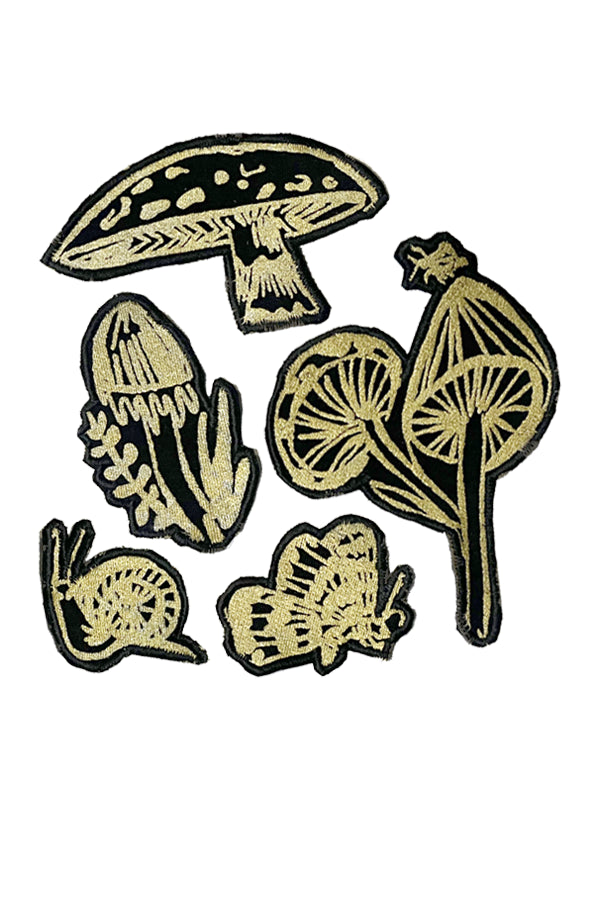
If you want a starting point, our Gold Shroom patch set is a handprinted piece to begin with, and the Serpent tote bag in black is an accessible handprinted accessory.

The honest position is that natural dyes are a real alternative for small-batch, handprinted production, not yet a drop-in replacement for industrial volume. We build around that limit rather than pretending it away.
Frequently Asked Questions
Are natural dyes better for the environment than synthetic dyes?
In several respects, yes. A 2026 comparative analysis describes natural dyes as biodegradable, non-toxic, and renewable, while synthetic dyes are largely petroleum-derived. But natural dyes are not automatically low impact: growing dye plants takes land and water, and mordants used to fix color can carry their own load. The honest answer is that natural dyes can be gentler, especially when wastewater is managed well, but the full picture depends on how the dye is grown, extracted, applied, and disposed of.
Can natural dyes produce colorfast clothing?
They can, with the right process. Colorfast natural dyes depend on fiber affinity, dye uptake, and fixation, which usually means mordants and careful dye baths. Indigo, madder root, and cochineal are among the more reliable traditional colorants for wash fastness and light fastness. Expect some shade variation between batches, since plant-based dyes respond to growing conditions. Treat naturally dyed pieces with cool washes and air drying to extend color life.
What are microbial dyes, and how are they used in textiles?
Microbial dyes for textiles are pigments produced by microorganisms through fermentation rather than harvested from plants. A 2025 review identifies microbial pigments as a promising alternative to both synthetic and plant-based dyes, and fermentation-derived colorants are presented as a possible route for textile dyeing. The appeal is consistent supply and less land use; the catch is that commercial adoption is still limited, so most shoppers will not find these dyes on a label yet.
How can I tell whether a garment uses lower-impact dyes?
Ask the brand directly and look for specifics rather than vague green claims. Useful signals include named dye sources, in-house dyeing, stated mordants or auxiliaries, and details on wastewater handling. Handprinted, made-to-order pieces often come with more traceable production information. At Thief and Bandit, garments such as the Dual Lightning Cropped Sweatshirt ($270.00) are dyed and printed in house using non-toxic, water-based acrylic inks, which gives you a concrete process to evaluate instead of a slogan.
Do natural dyes require mordants?
Most do. Mordants are metal salts or other auxiliaries that help dye bind to fiber, improving color strength and wash fastness. Without them, many plant-based dyes fade quickly or rinse out. The trade-off is that some mordants carry environmental or skin-sensitivity considerations, so the choice of mordant matters as much as the dye itself. Brands that can tell you which mordants they use are usually the ones taking the process seriously.
